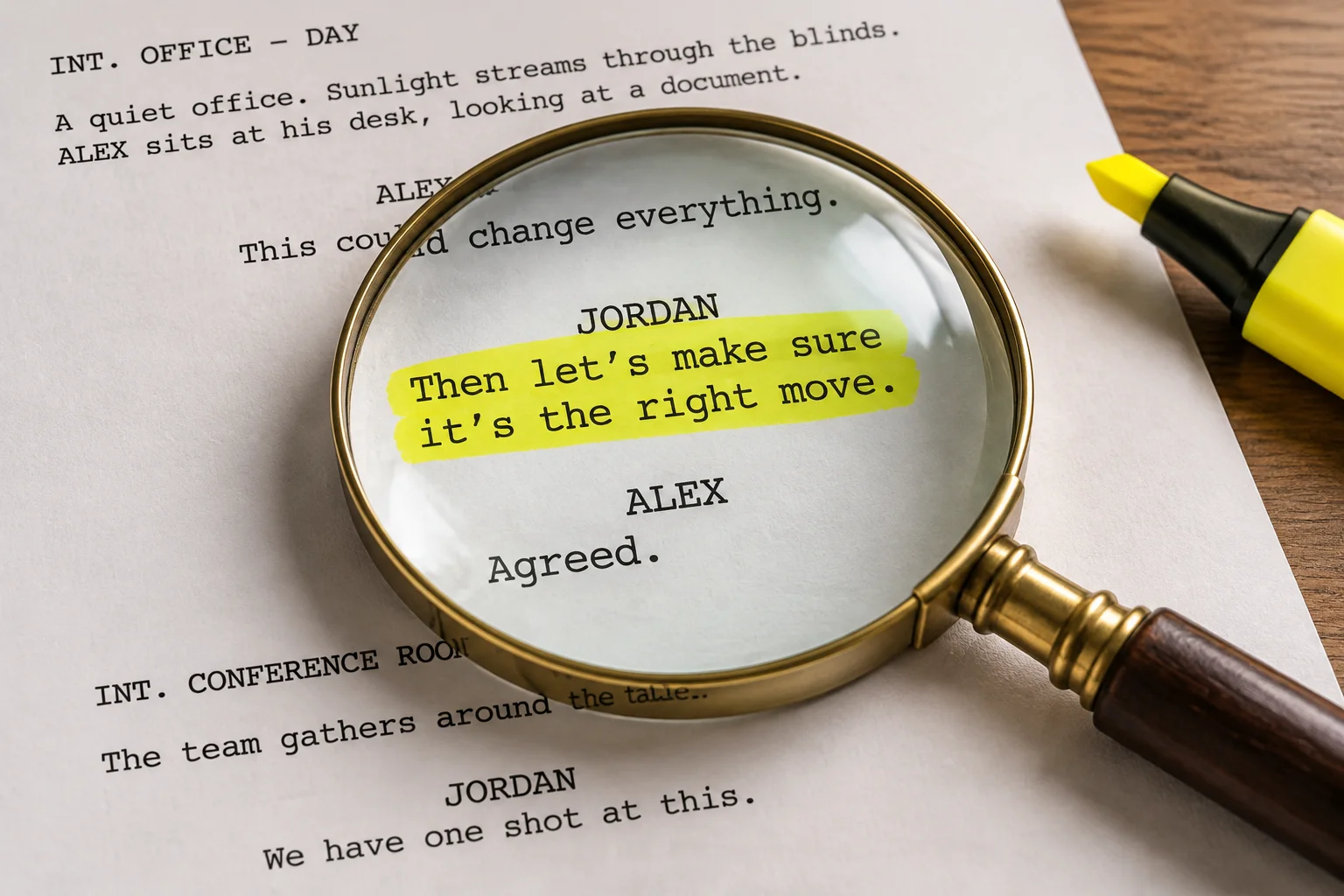
Architectural Anatomy: Beyond the Three-Act Constraint
While standard cinematic convention often relies on predictable minute-by-minute turning points, Oscar-nominated screenplays routinely restructure conventional act divisions around organic necessity. When examining recent contenders across Original and Adapted screenplay categories, an overarching constant surfaces: every sequence directly manufactures the crisis of the next. In stories like Past Lives, The Banshees of Inisherin, or Anatomy of a Fall, narrative motion does not rely on sudden external catastrophe; it emerges from the friction between character choices and their unavoidable systemic aftermath.
Writers frequently mistake narrative momentum for high incident rates. Yet the scripts lauded by the Academy reveal that density of consequence outweighs density of events. A single conversation can exert tremendous structural torque if it irrevocably shifts the balance of power between two people. By tracking how narrative leverage redistributes after every scene, one observes that recognized scripts operate like interlocking cogs rather than episodic beads strung along a timeline.
A prestige screenplay does not captivate because unexpected things happen; it captivates because every action makes the subsequent dilemma both terrible and inevitable.
— Robert Cole, Senior Story Editor
Three Foundational Pillars Observed in Award-Nominated Writing
Detailed examination of nominated manuscripts indicates three recurring tactical habits that separate ordinary studio drafts from enduring prestige narratives:
- Strict Reversal Mechanics: Scenes never terminate in emotional equilibrium. If a sequence opens on hopeful negotiation, it must conclude with compounded vulnerability or an altered commitment that blocks the protagonist from returning to their initial baseline.
- Subtext-Driven Causal Pressure: Instead of external plot engines dictating terms, dramatic pressure builds from unspoken stakes and ethical compromises that protagonists accumulate across successive scenes.
- Irreversible Midpoint Fractures: The midpoint of a nominated screenplay is seldom a symbolic victory or mere tempo shift. It functions as an ethical point of no return where retreat becomes structurally impossible.
Notice how these techniques dismiss arbitrary contrivance. When writers eliminate plot convenience and hold their central figures accountable to physical and moral laws established on page one, audience engagement shifts from passive spectatorship to active emotional complicity.
Practical Takeaways for Developing Prestige Manuscripts
Applying these insights to an in-development draft requires rigorous diagnostic reading. Strip away stylistic ornamentation and dialogue flourishes during revision passes to evaluate the raw skeleton of scene-to-scene transactions. Ask whether each scene can be relocated, swapped, or deleted without breaking the logic of the ending. If a scene's absence leaves the subsequent scene intact, its causality is compromised and its existence requires immediate justification.
Diagnostic Checklist for Writers
Track every dramatic unit by identifying the explicit desire, the immediate collision, the compromised action taken, and the permanent price extracted. If a beat extracts no price, it generates no causal momentum.