Setting Up a Side-by-Side Comparison
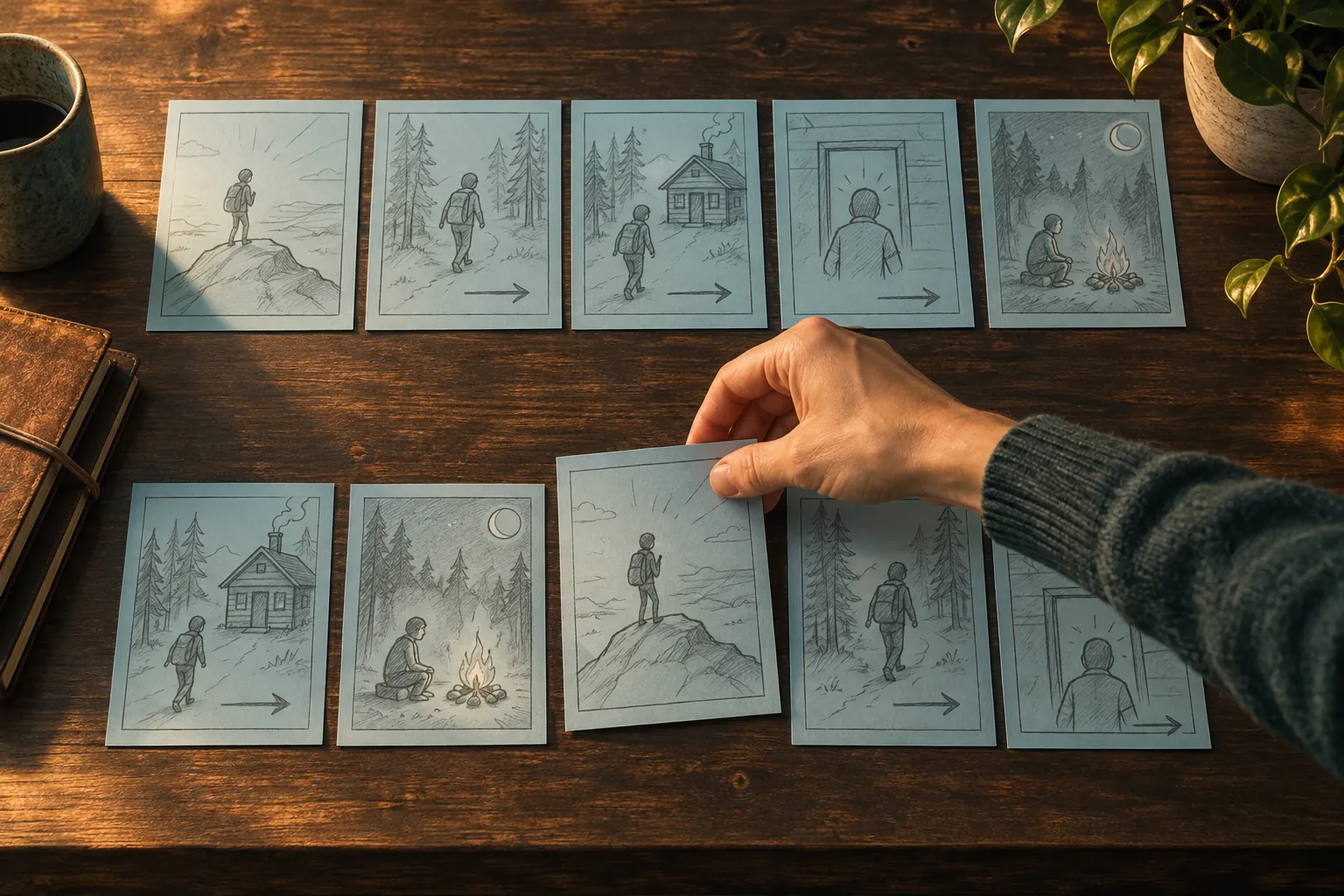
Write the original order in one column and the alternative order in a second column. For every position, note three things: what the protagonist knows when the scene begins, what the protagonist decides during the scene, and what the next scene inherits from that decision. The two columns should use identical beat labels so that only the position changes.
The comparison quickly exposes beats that depend on earlier information. A confession, a betrayal, or a cover-up usually needs a specific discovery before it. If that discovery now appears later, the decision either loses its logic or requires a new reason.
When a scene moves, its motivation does not automatically move with it.
— Sarah Jenkins, Scene Function Analyst
Reading the Motivation Gaps
A motivation gap appears wherever a character makes a choice that the alternative order no longer explains. In the illustrative case The Missing Evidence Sequence, the hero hides evidence after finding it. If the discovery is moved after the decision to hide something, the hero is concealing what she has not yet found. The writer must either invent a different object of concealment or give her an earlier, independent reason to deceive.
Gaps are not automatically errors. Sometimes an alternative order creates a stronger mystery because the audience sees the decision before understanding it. The comparison simply makes clear what new setup the alternative order requires.
Choosing Between the Orders
Evaluate both columns against the story goal rather than against each other. Which order keeps every decision motivated? Which order raises the stronger question for the audience? Which order needs fewer additional scenes to stay coherent? Record the answers as rewrite notes so the final choice is a structural decision rather than a matter of taste.
Two-Order Comparison Questions
In each order: What does the character know before deciding? What does the decision change? Which beat now needs a new reason, and can that reason be planted earlier without adding a scene?