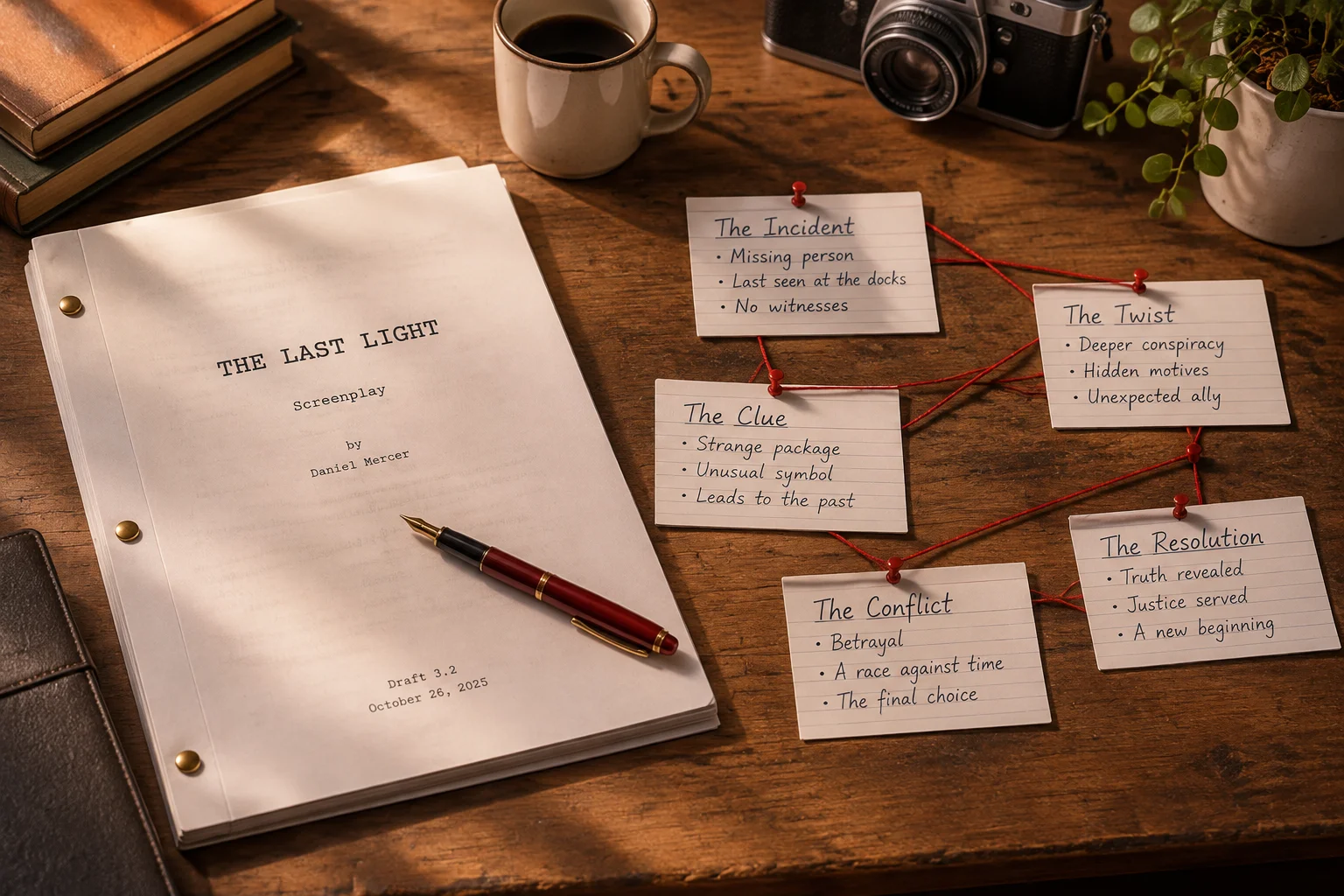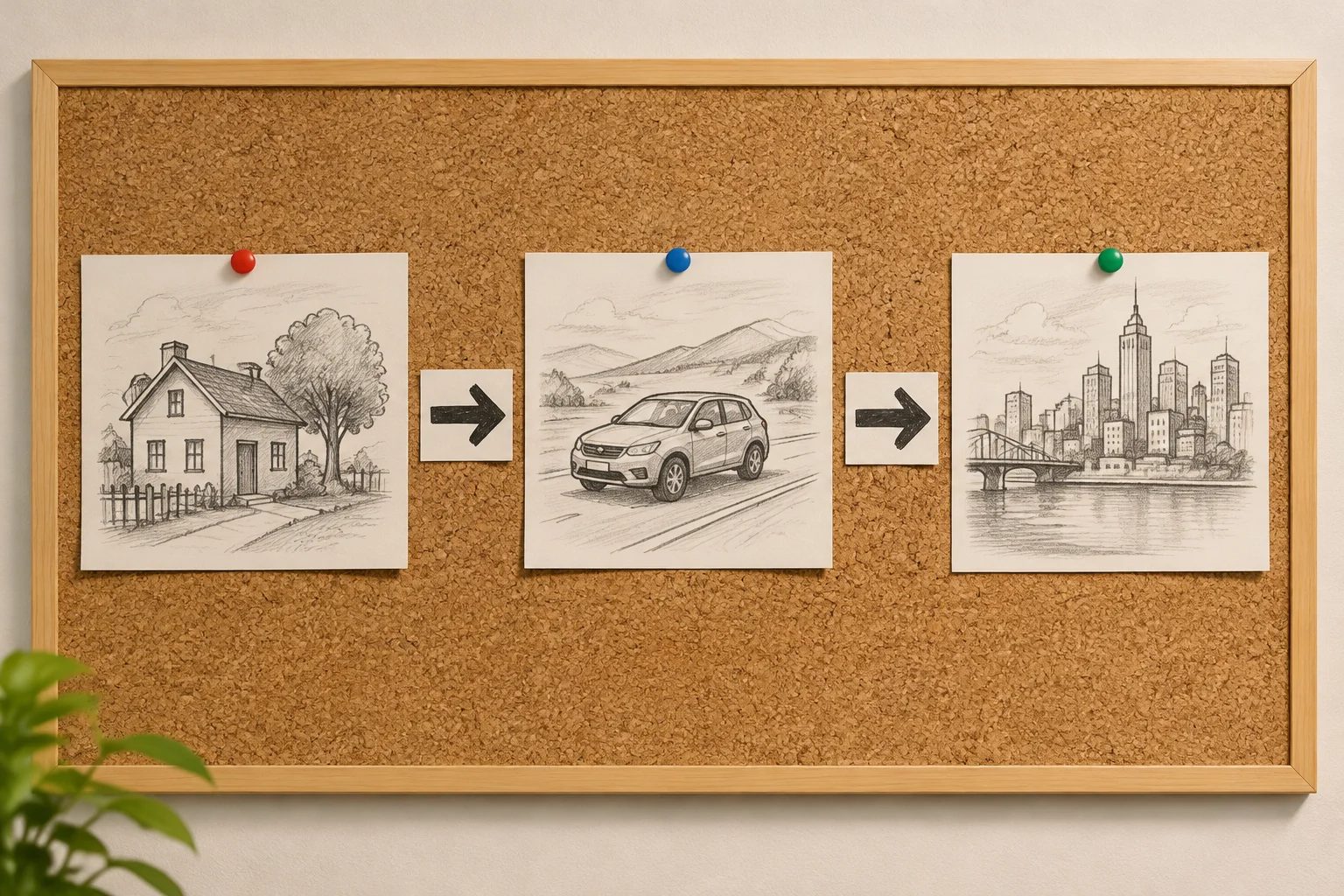
Deconstructing the Triad Scene Architecture
Narrative progression stalls when writers view scenes as self-contained showcases for conflict. A scene can crackle with heated dialogue, high-stakes physical confrontation, or psychological revelations, yet still leave the overarching story stagnant. This breakdown happens when the resolution of that beat fails to exert immediate pressure on the characters in the next setting. Causal momentum demands that the third scene exists exclusively because the first scene occurred and the second scene failed to neutralize its impact.
In classical dramaturgy, single scene-to-scene linkages can be misleading. A character leaves a room because someone knocked, then talks to that visitor on the street; this feels continuous, but it is purely temporal. Real causal architecture emerges over a three-scene triad: an aggressive choice in Scene A generates immediate obstacle friction in Scene B, which prompts a desperate tactical maneuver whose real, compounding price is extracted in Scene C. Without that third beat cementing the fallout, the initial decision lacks genuine consequence.
If scene three remains perfectly coherent after scene one is deleted from the sequence, your middle scene was merely providing atmosphere, not dramatic causality.
— David Ross, Narrative Structure Analyst
Structural Anchors of Sequential Causality
Crafting interlocking three-scene blocks requires writers to monitor value shifts, resource depletion, and relational leverage across scene headings. When a triad operates cleanly, the protagonist finds their options narrowed at every transition:
- The Instigating Compromise (Scene A): The protagonist commits to an irreversible choice or reveals critical vulnerabilities under intense pressure, burning a safety bridge behind them.
- The Complicating Collision (Scene B): The immediate counter-reaction from external forces arrives swiftly, making the chosen path significantly harder and demanding an improvised detour.
- The Compounding Toll (Scene C): The improvised maneuver produces an unforeseen crisis that directly forces the next sequence into higher stakes, permanently altering the dramatic balance.
When these three scenes chain together, audience attention locks in. Viewers no longer anticipate arbitrary events; instead, they experience the mounting tension of watching a character grapple with the widening ripples of their own tactical errors.
Diagnosing False Continuity in Screenplays
During manuscript revisions, examine sequence transitions using the “Therefore / But” test popularized in professional writers rooms. If consecutive scene descriptions can only be connected by the phrase “and then,” the structural link is broken. Scene A occurred, AND THEN Scene B happened, AND THEN Scene C occurred describes a chronicle of events, not a story arc. True cause-and-effect demands: Scene A occurred, THEREFORE Scene B had to happen, BUT that produced an unexpected barrier, THEREFORE Scene C exploded into life.
The Three-Scene Diagnostic Test
Audit any three consecutive scenes in your second act. Remove the middle scene entirely. If the third scene remains structurally functional without revisions, the middle beat was ornamental. Rewrite the sequence so that the climax of the third scene is literally impossible without the specific choices executed in both preceding scenes.