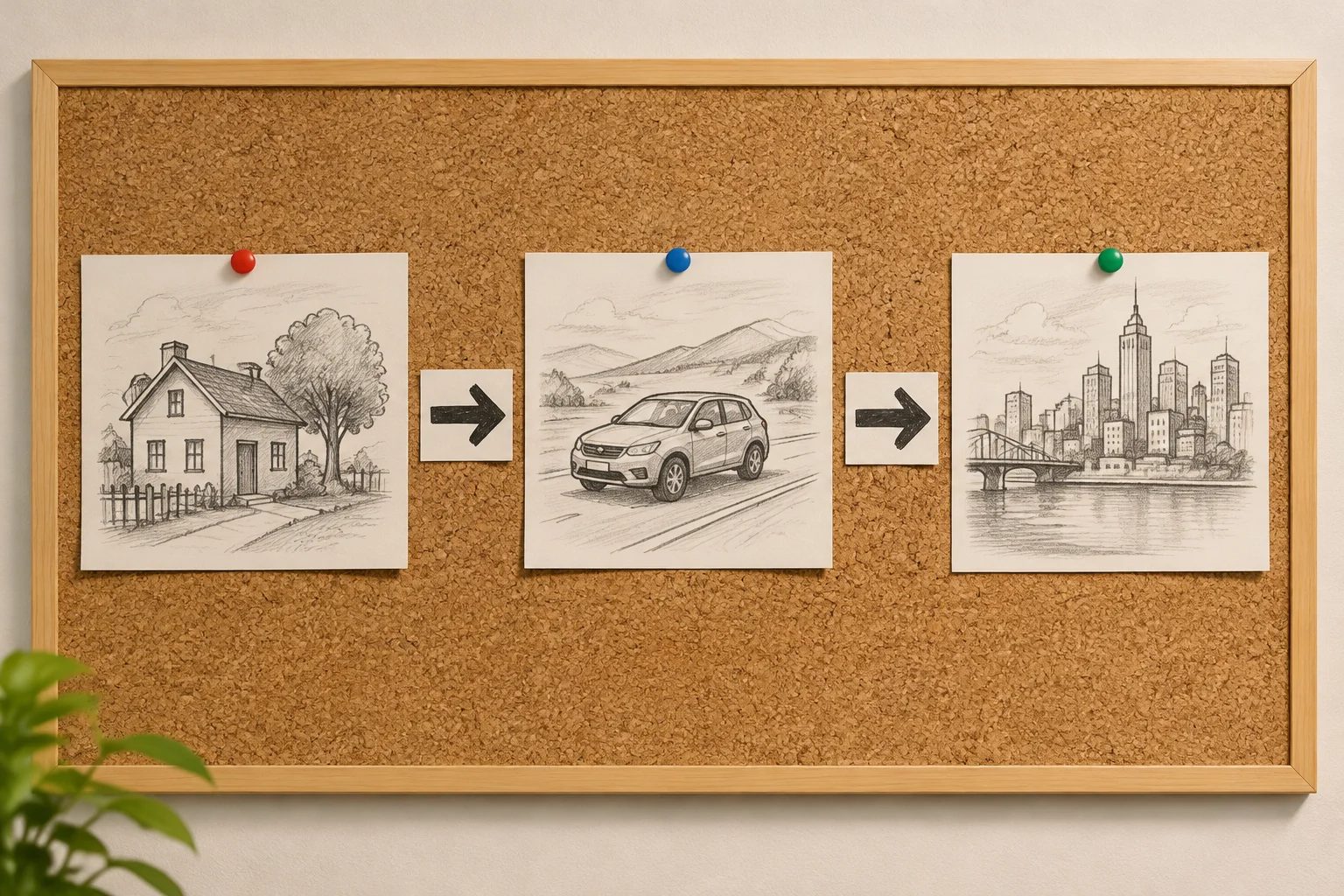
The Illusion of Progress in Disconnected Beats
Screenwriters frequently mistake kinetic motion for narrative progression. A character rushes across town, exchanges fiery dialogue, or unearths an ancient document, yet enters the following scene with the exact same emotional resilience and strategic freedom. When a sequence concludes without altering the immediate choices available to the protagonist, the audience instinctively senses that the story has stalled. The beat functioned merely as an isolated showcase rather than an engine of genuine transformation.
True narrative architecture treats dramatic beats as dominoes. If beat A does not directly trigger beat B or force a painful adjustment in beat C, it can be deleted in the edit room without collapsing the narrative spine. Writers often resist pruning such scenes because the dialogue sings or the atmosphere is rich, but narrative tension evaporates whenever characters remain immune to the outcomes of their own decisions.
If a protagonist walks out of a scene with the exact same tactical choices they brought into it, the scene never happened.
— Michael Vance, Senior Narrative Architect
The Three Laws of Narrative Consequence
Ensuring that every beat leaves a permanent mark on the storyline requires subjecting outlines and scene drafts to rigorous causality checks:
- The Narrowing Doorway: Every consequence must permanently shut down comfortable alternatives. A rash decision to confront an adversary in public instantly eliminates subtle investigative avenues and forces immediate confrontation.
- The Tactical Shift: When an attempt fails or succeeds, the character's operative strategy must pivot. Repeating the exact same tactic under unchanged conditions produces stagnant, repetitive plotting.
- The Relational Ripple: Action taken in one arena inevitably alters interpersonal dynamics elsewhere. A hidden truth revealed to an ally immediately fractures loyalty, triggering fresh secondary complications.
Applying these principles replaces the disjointed rhythm of "this happened, and then that happened" with the accelerating drive of "this happened, therefore that occurred, but an unforeseen complication emerged."
Diagnosing Consequence-Free Sequences
During revision passes, interrogate every scene boundary. Pinpoint what tangible fact, emotional reality, or power balance has shifted between the opening line and the final transition. If the protagonist learns information they already suspected without being forced into an urgent countermove, compress or excise the moment. Dramatic consequence is not merely punishment; it is the physical proof that a story exists in time.
The Causality Diagnostic Checklist
Before finalizing any script sequence, confirm: Did the power dynamic invert? Did the protagonist forfeit a crucial resource or inherit an inescapable deadline? If not, inject an immediate repercussion to propel the next beat.