Stating the Purpose of Each Beat
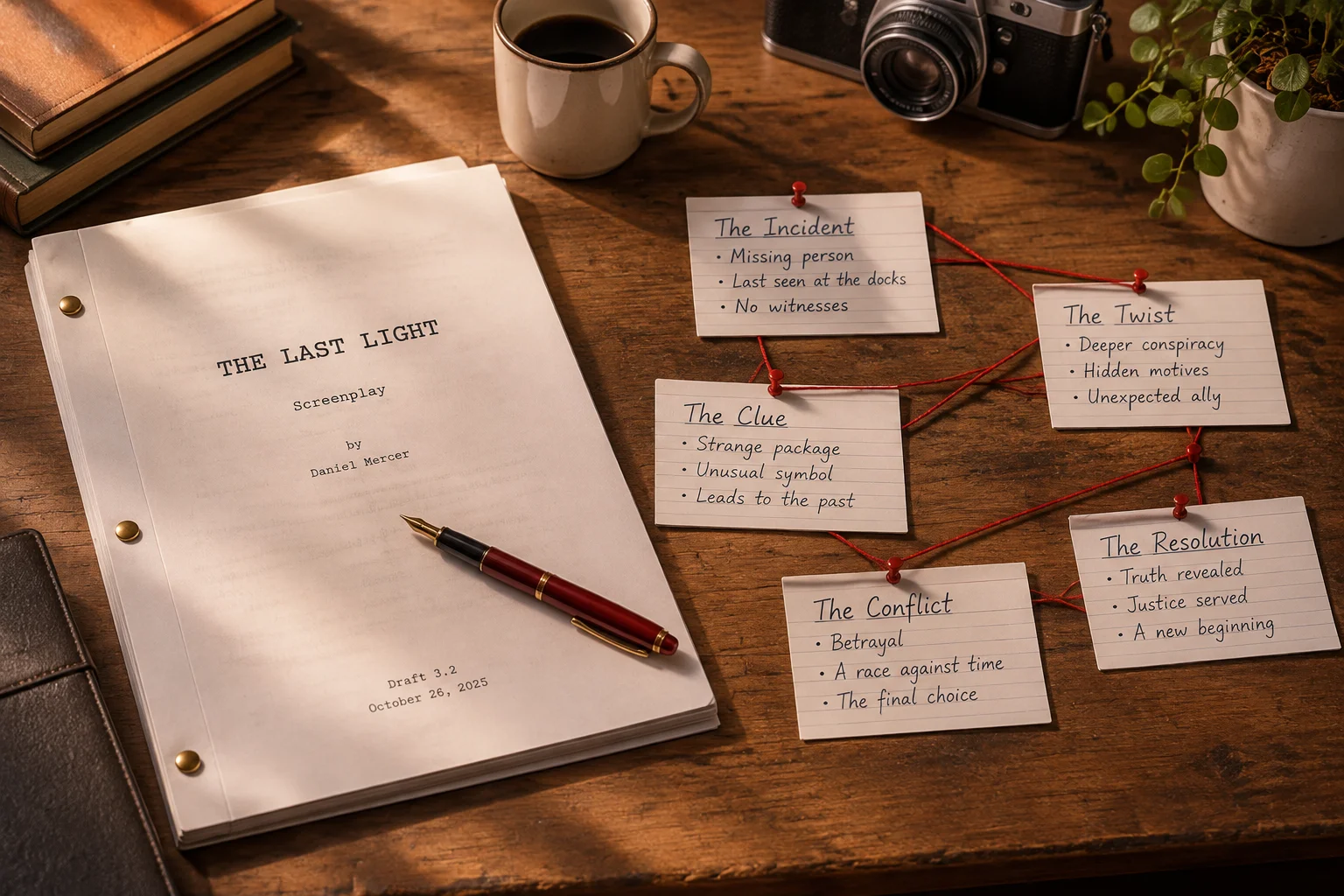
Before reviewing a scene, rewrite its beat card as a single purpose sentence: what must be different when the scene ends. "She finds the letter" becomes "She learns her partner lied about the night of the theft." The purpose sentence is the standard against which the written scene is checked.
If a card cannot be turned into a purpose sentence, the beat may be atmosphere rather than story. That is useful information: atmosphere can be merged into a neighbouring scene that already carries a change.
Four Scene-Review Questions
Review every scene with the same four questions. What does the character learn? What does the character decide? What does that decision cost or risk? What does the next scene inherit? Answers should point to specific moments in the draft, not to intentions in the outline.
The map tells you where the turn should be. The review tells you whether the turn happened.
— Emily Carter, Plot Mechanics Editor
Feeding the Review Back to the Map
Scene reviews often reveal that a turn happens one scene later than the map suggests, or that two cards describe the same change. Update the map after each review pass so it reflects the draft as written. The map and the review then work as a loop: structure suggests scenes, and scenes correct the structure.
Scene Review Template
Purpose sentence; what the character learns; what the character decides; the cost or risk of that decision; what the next scene inherits. Leave a field empty only when you have consciously decided the scene does not need it.